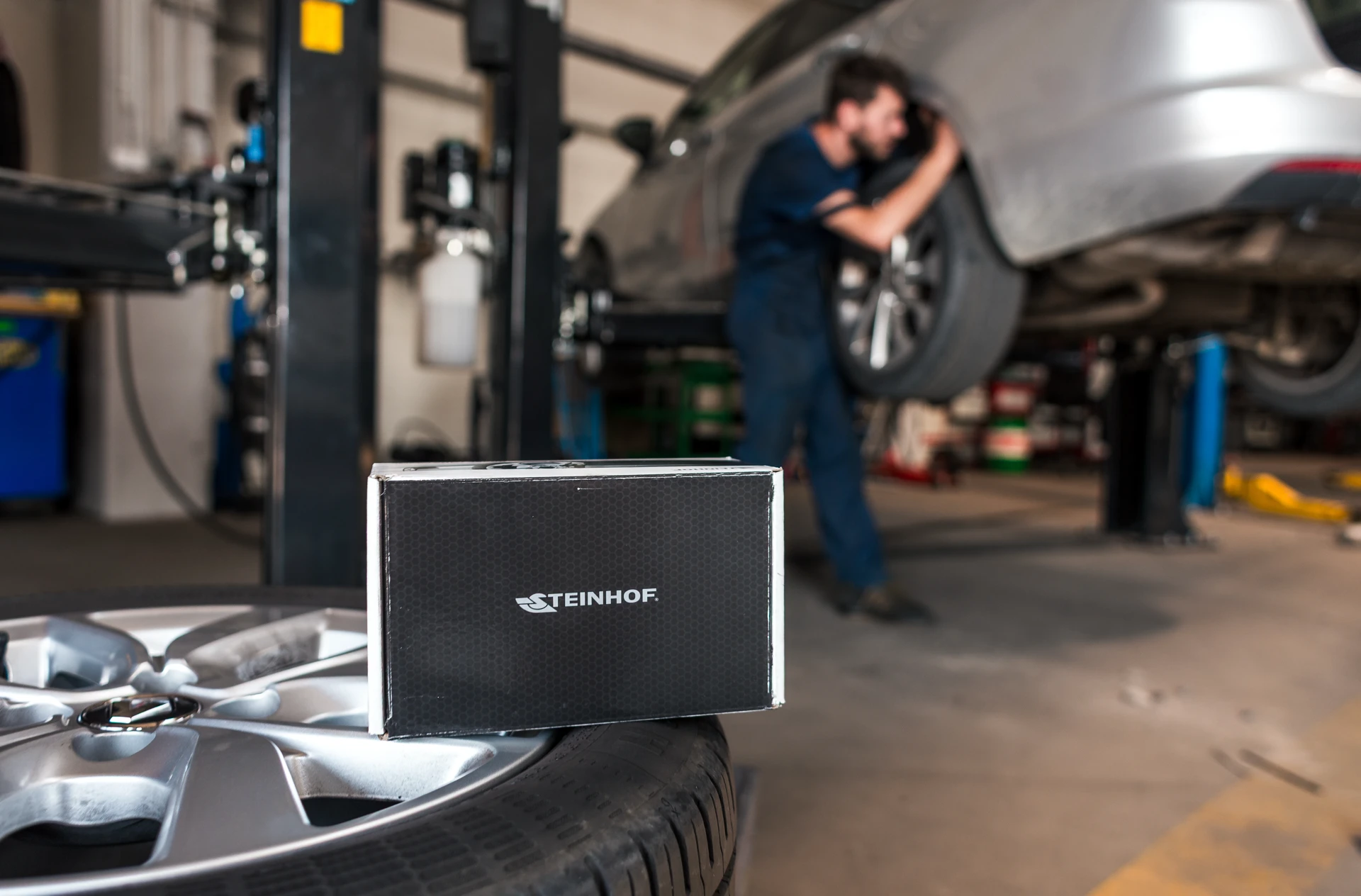
Snow-covered roads and severe frost will soon become a part of our daily lives. In such weather conditions, it is especially important that the braking system remains in perfect working order. For this reason, Steinhof offers advice on what to look for during a routine brake inspection in the winter season.
Snow-covered roads and severe frost will soon become a part of our daily lives. In such weather conditions, it is especially important that the braking system remains in perfect working order. For this reason, Steinhof offers advice on what to look for during a routine brake inspection in the winter season.
Brake fluid level
While a great deal of attention is paid to the wear level of brake discs and pads, the importance of regularly checking brake fluid levels is less frequently discussed. Having the right amount of fluid is essential for the proper functioning of the entire system—and, by extension, for our own safety. It is therefore worth checking regularly to ensure there is a sufficient amount of brake fluid in the reservoir under the hood.
In a properly functioning vehicle, the fluid level may gradually decrease as the brake pads wear down. This is a natural occurrence. However, the fluid should not be topped up unnecessarily, because once the brake pads are replaced with new ones and the pistons are retracted, the fluid level will rise again. In such a case, the excess fluid could spill out of the reservoir.
If the fluid level drops below the minimum mark, you must determine the cause of the loss and check the system for leaks before topping it up. Only after verifying the technical condition should you proceed to add more fluid.
It is also recommended to replace it regularly—at least every two years, or after driving 40,000–50,000 km. It should be noted that brake fluid is highly hygroscopic, meaning it absorbs moisture from the environment. As the water content increases, the fluid's properties deteriorate, which can negatively affect the performance of the entire braking system.
Technical condition of brake lines
Another important component that should be checked is the brake lines. Two basic types of lines are used in cars.
The first type consists of rigid lines, made from materials such as steel or copper. Their lifespan can reach over a decade, though much depends on the conditions in which the vehicle is used on a daily basis.
The second type consists of flexible hoses, typically made of rubber and appropriately reinforced. Their lifespan is generally shorter, meaning they may require replacement after just a few years of use. It is advisable to regularly check their condition—especially following periods of severe frost—while keeping an eye out for any potential damage or leaks.
Check the condition of your brake discs and pads before a winter trip.
The best time for a thorough inspection of the condition of your brake discs and pads is during the seasonal changeover from summer to winter tires. However, it sometimes happens that the brakes are not checked during such a visit whether due to being in a rush or because of the use of all-season tires.
However, it is worth checking their condition before a long journey for instance, when traveling to visit family for the holidays. An extra inspection can help identify components that are nearing their wear limit, before their condition begins to compromise driving safety.
Replacing brake discs and pads is a fundamental maintenance task; however, the proper functioning of the braking system also depends on other components. For this reason, we recommend regularly checking the brake fluid level and assessing the condition of the brake lines especially before winter trips.