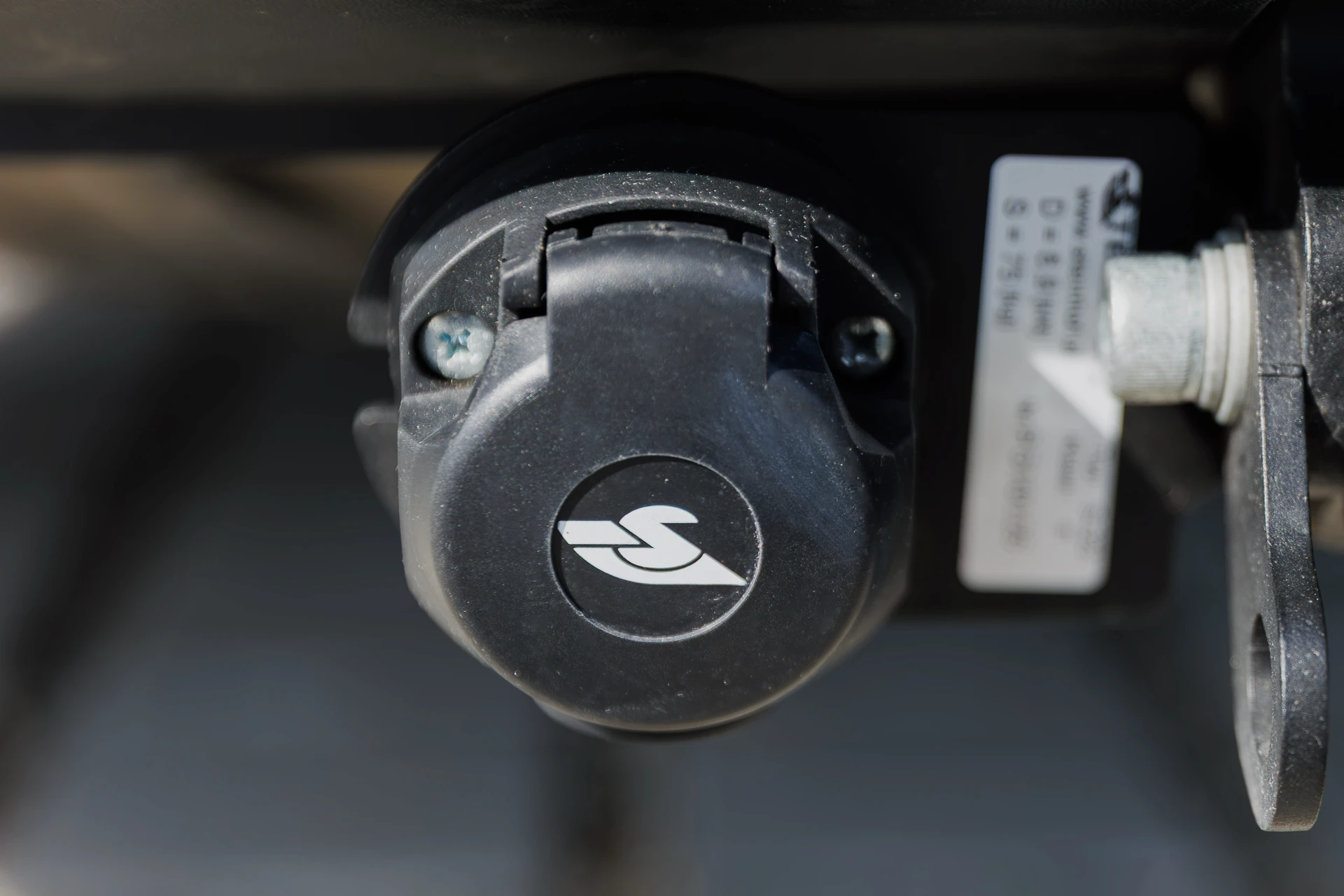
Installing a towbar involves not only mechanically mounting it but also connecting the electrical system. It is through this system that power is supplied to the lights on the trailer or bike rack. There are primarily two socket standards to choose from: 7-pin and 13-pin. Which one is the right choice?
7-pin connector - when is it enough?
The choice of wiring harness should depend primarily on how you intend to use the tow hitch. A key difference between the options concerns, among other things, the reverse light. The 7-pin standard does not support it, whereas the 13-pin connector has an additional pin specifically for this light.
This is important when towing heavier trailers. For trailers with a gross vehicle weight rating (GVWR) exceeding 750 kg, a reverse light is required. Therefore, for this application, a 13-pin installation is the appropriate choice. On the other hand, for light trailers with a GVWR not exceeding 750 kg, a 7-pin wiring harness may be sufficient for basic needs.
Bicycle platform – definitely 13 PIN
The 13-pin connector is also the right choice for those who use tow-hitch-mounted bike racks. This type of rack must support the operation of lights corresponding to the vehicle’s equipment, including parking lights, turn signals, brake lights, fog lights, and reverse lights.
For this reason, those planning to regularly transport bicycles on a bike rack should opt for a 13-pin connector. It ensures support for the full range of required lighting functions.
Camping trailer
The 13-pin connector is also suitable for more complex applications, particularly with travel trailers. In addition to powering the reverse lights, it allows for the use of additional electrical circuits, such as for charging the trailer’s battery or providing a constant power supply to devices inside the trailer.
Those who already have a 7-pin socket but occasionally need to connect a device equipped with a 13-pin plug can use a special adapter. However, it’s important to remember that this solution won’t always ensure full functionality of the 13-pin system. The adapter’s functionality depends on the specific solution used and the particular car model.
When is an electrical module needed?
Modern cars have increasingly complex electrical systems, which is why the wiring harness alone is not always sufficient. Depending on the vehicle’s design, the installation may require a control module that ensures proper communication between the tow hitch system and the car’s electronics.
This solution is particularly important in vehicles equipped with a CAN bus, the Check Control lighting system, or parking sensors. In the latter case, a properly selected installation can enable the automatic deactivation of the rear sensors when the trailer plug is connected.
Before choosing a wiring harness, it is therefore worth checking not only the type of device you intend to connect to the tow hitch, but also the equipment and electronics of the specific vehicle.