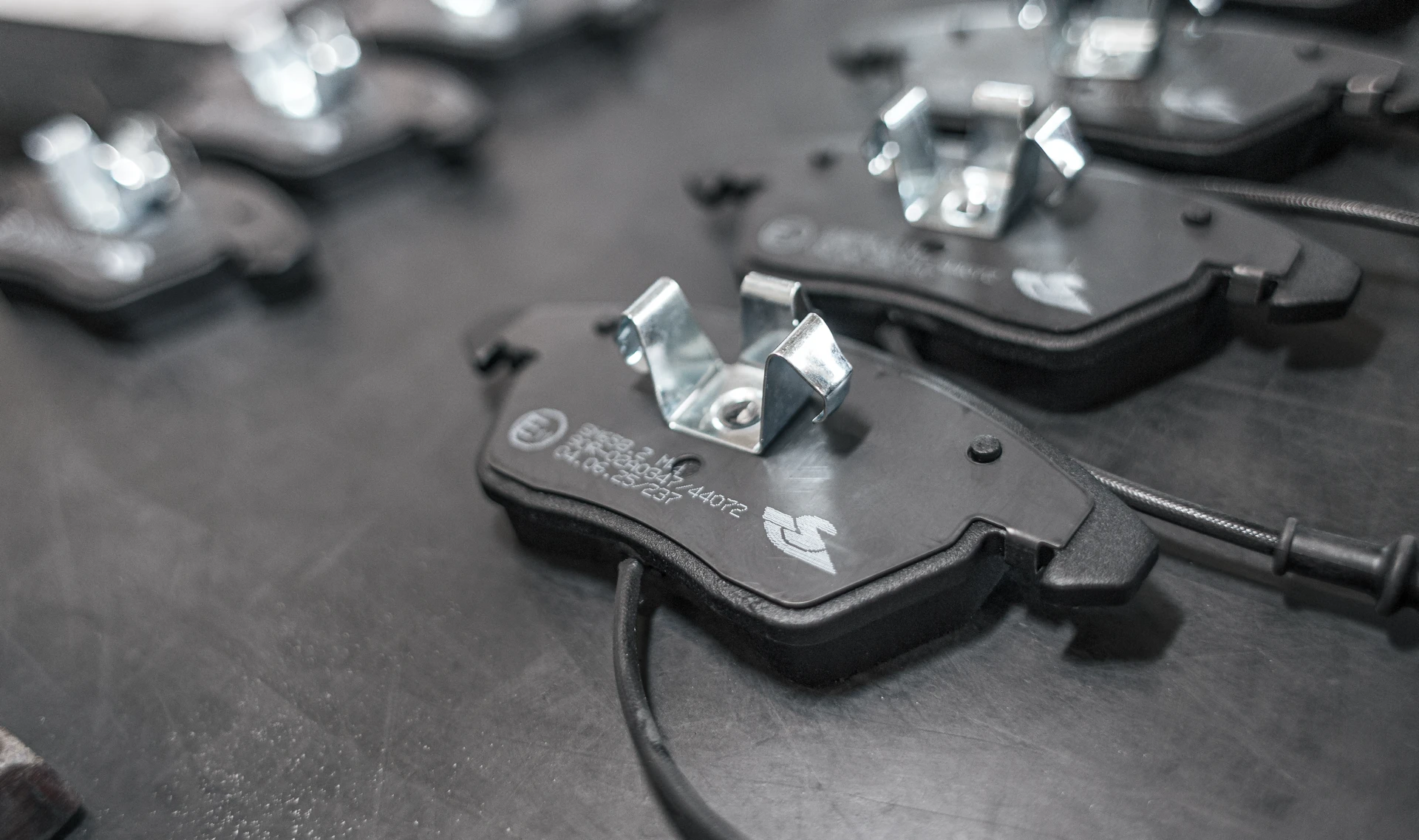
The braking system is crucial for driving safety. Braking effectiveness is influenced not only by the brake rotors and pads, but also by other components that work in conjunction with the entire system. One of these is the ABS system, which monitors the proper operation of the braking system.
A malfunctioning ABS sensor can disrupt the system’s proper operation, so it should not be ignored. However, it’s important to remember that a faulty sensor alone isn’t necessarily the direct cause of uneven brake pad wear. This symptom may also indicate mechanical issues, such as problems with the brake caliper or guide rails.
In this Steinhof guide, we explain the role of the ABS sensor and whether its failure can affect brake performance.
Symptoms that may indicate a problem with the ABS sensor
ABS sensors are responsible for monitoring wheel speed and transmitting this information to the system’s control unit. Based on this information, the system can respond appropriately during braking and reduce the risk of wheel lockup. If any of the sensors stops transmitting correct data, ABS operation may be limited or completely disabled. What signs should a driver look out for?
One of the most characteristic symptoms is the ABS warning light coming on on the dashboard. The appearance of the yellow light indicates that the control unit has detected a malfunction in the system. The cause may include a sensor failure, so the warning should not be ignored even if the car appears to behave normally during standard braking. In the event of a malfunction, the ABS may not be available when it is needed most.
Problems with the ABS system may also be noticeable during braking. The driver may feel that the car is behaving erratically or pulling to one side. However, this is not a symptom unique to a faulty ABS sensor. Similar behavior may also be related to mechanical problems with the braking system, so it requires proper diagnosis.
Another sign may be unusual brake pedal behavior. During heavy braking, a properly functioning ABS system may cause a characteristic pulsing of the pedal—this is a normal reaction of the system. If the system does not respond as expected or, conversely, activates in a situation where it should not, it is worth checking its operation.
Special attention should be paid to wheel lockup during sudden braking. One of the functions of the ABS is to limit this phenomenon. If the system does not receive accurate information from the sensors, its response may be incorrect. The lockup of one or more wheels can compromise the car’s stability and make it difficult for the driver to control the vehicle.
These issues may be more noticeable on wet, icy, or slippery surfaces. In such conditions, a properly functioning ABS system helps maintain control of the vehicle during heavy braking. If the system is not working correctly, the driver may notice a change in the car’s behavior, especially during sudden braking or dynamic maneuvers.
It also happens that the driver hears unusual noises or feels vibrations during gentle braking. In the event of incorrect sensor readings, the control unit may receive erroneous information regarding wheel speed, which in certain situations can lead to unjustified ABS intervention. If characteristic noises or vibrations occur for no apparent reason, it is advisable to have the system diagnosed.
It’s worth remembering that none of the symptoms listed above necessarily indicate a malfunction of the ABS sensor alone. Similar symptoms can also be caused by damaged wiring, problems with the ABS ring, a dirty sensor, or malfunctions in other components of the braking system. Therefore, if the ABS warning light comes on or you notice an unusual change in the car’s behavior, this should prompt you to have the entire system inspected, rather than simply replacing the sensor itself.
Why might this affect the brake pads?
Malfunctioning of the ABS system can disrupt the distribution of braking force among the wheels, which in some cases can contribute to uneven brake pad wear. Ignoring the problem for an extended period increases the risk of overheating, accelerated wear, and reduced braking effectiveness.
It is worth remembering, however, that uneven brake pad wear is more often caused by mechanical faults, such as a seized caliper, faulty guides, or a faulty piston. Therefore, any concerning symptoms always require a thorough diagnosis.