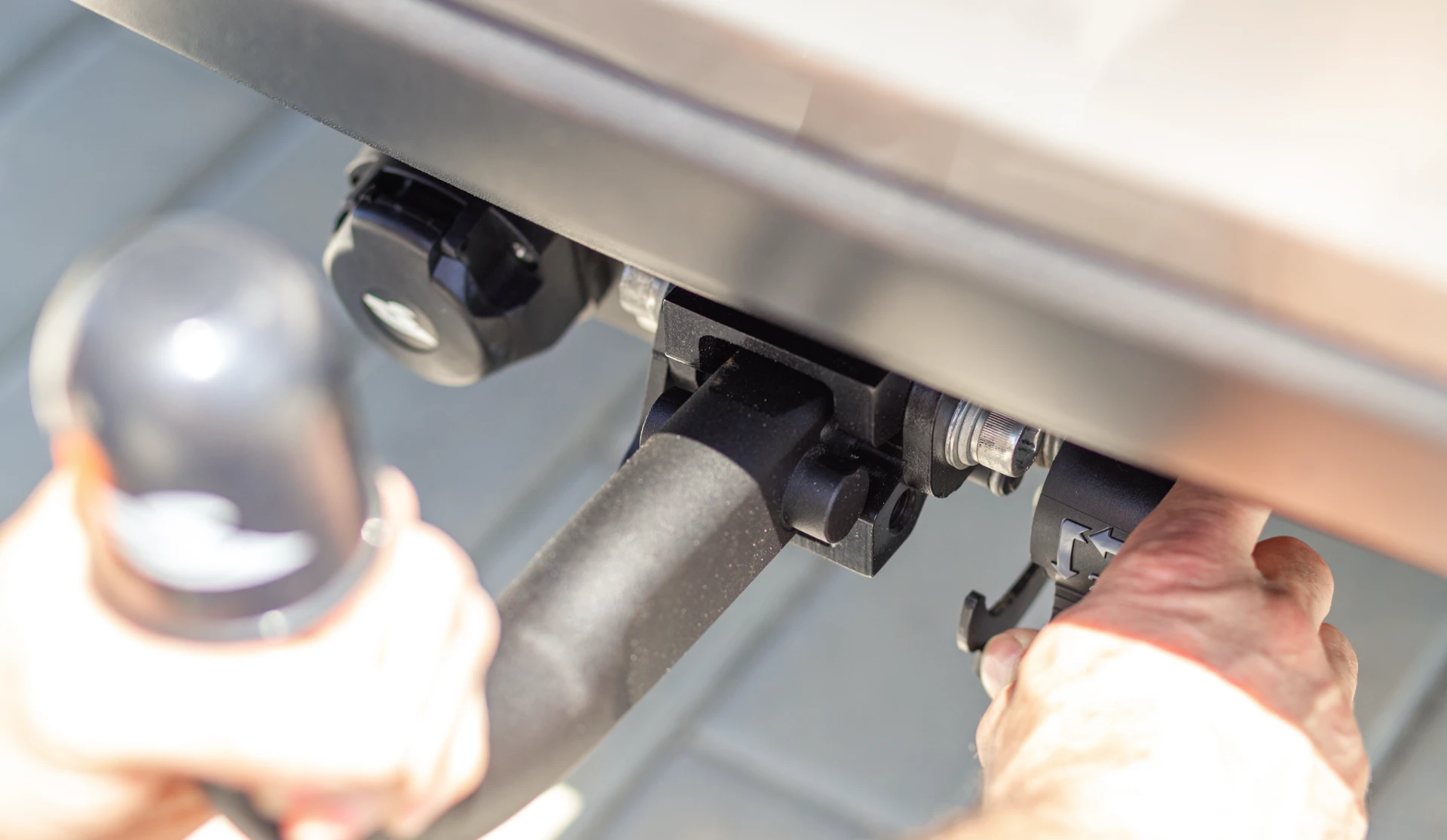
Installing a towbar requires proper preparation and knowledge of the specific vehicle’s design. The kit itself consists of several basic components—including the body, the ball, the wiring harness, and the electrical connector. Before beginning the work, you must check, among other things, whether the vehicle is capable of towing a trailer, the vehicle’s permissible load limits, the presence of an LPG system, and the operation of the parking sensors.
Start by choosing the right towbar
One of the most common mistakes is purchasing the wrong tow hitch model. Different car models may vary in design, so before making a purchase, you should carefully verify that the towbar is compatible with your specific vehicle.
It’s also worth checking whether the car has the necessary certification to tow a trailer. In rare cases, a vehicle may not be equipped for this purpose. In such cases, installing a tow hitch will not be possible, and after the work is completed, the inspector will not issue a certificate confirming that the installation was done correctly.
The assembly instructions are essential
The work usually begins with removing the bumper and, if necessary, disconnecting the lights. Next, the factory reinforcement beam is removed, and the mounting points for the towbar are properly prepared. Many cars have factory-drilled holes specifically designed for installing this type of equipment.
The towbar body should be mounted according to the manufacturer’s instructions, using the fasteners included in the kit. All connections should be tightened with a torque wrench to the torque specified in the instructions. Do not attempt to install the tow hitch “by memory,” even if you have extensive experience.
Don't forget about the electrical system
Once the mechanical part of the tow hitch has been installed, it’s time to connect the wiring harness. Depending on the vehicle, you may need to partially remove the trunk trim and route the wires through the factory-provided opening.
In more advanced systems, an electronic module is used to ensure proper interaction between the tow hitch and the vehicle’s electronics. This is particularly important in vehicles equipped with, among other things, a CAN bus, the Check Control lighting control system, or parking sensors.
Connect the wiring harness according to the diagram included with the kit. If a module is required, connect the power cable directly to the battery. The routing of the cable depends on the vehicle’s design and the location of the battery.
What about parking sensors?
In some cars, the tow ball may be within the range of the rear parking sensors. As a result, the system may detect it as an obstacle. Depending on the vehicle model, it is possible to adjust the sensors’ range or deactivate them using diagnostic tools.
The problem can also be mitigated by using a towbar with a detachable ball and removing it when it is not needed. However, you should always follow the guidelines provided by the specific car manufacturer.
Check the weight capacity
Before towing, you must also check the vehicle’s specifications. Of particular importance are the maximum trailer weight and the permissible vertical load on the tow ball. This information can be found, among other places, in the vehicle’s documentation and registration certificate.
Do not rely solely on the values listed on the hitch’s nameplate. If the hitch’s specifications exceed the permissible values for the vehicle, the limits specified by the vehicle manufacturer apply.
Inspection of the towbar after installation
Once the work is complete, the car must be taken to a Vehicle Inspection Station. The inspector checks, among other things, that the tow hitch is installed correctly, the tow hitch’s nameplate, and the document confirming that the installation was performed correctly.
The final step is to visit the Department of Motor Vehicles and have the appropriate entry made in the vehicle registration certificate.
Proper installation of a tow hitch involves more than just mechanically bolting it in place. Equally important are the correct selection of the product, compatibility with the vehicle’s design, proper connection of the electrical system, and adherence to the vehicle’s permissible specifications.
What should you keep in mind?
Installing a towbar is a task where it’s not worth cutting corners. It’s crucial to ensure the hitch fits the car properly, to follow the manufacturer’s instructions, and to make the mechanical and electrical connections correctly. Before beginning the work, you should also check whether the vehicle is capable of towing a trailer and verify its permissible load limits.
Proper installation ensures greater safety when using a trailer or bike rack and ensures that the hitch works properly with the car’s electronic systems.